Showing posts with label blogfest. Show all posts

Monday, April 30, 2012

Z is for Ziggy Stardust


It’s the last day of the #AtoZChallenge, and boy, has this month wiped me out. There’s a reason I don’t blog every day, guys. PHEW!

But I’m glad I participated – I made some new blogging friends, I discovered a whole whack of cool blogs that I hadn’t heard of before, and I learned to think and write faster than I could before. Kind of like NaNoWriMo for bloggers.

So, how about some fun to finish off the month?

David Bowie is one of my favorite musical artists: he’s versatile, he’s way out of the box, and at his peak, he completely gave himself over to his art. And even though a lot of that went along with giving himself over to another thing entirely, which is a thing that I don’t at all support and which is really a subject for another blog, you’ve got to give him props for opening the door for people like Madonna, Lady Gaga, and Nikki Minaj to go beyond the music when it came to the expression of their ideas. David Bowie didn’t just have a musical brand – he WAS his brand.

So let’s hear it for his most famous alter-ego, Ziggy Stardust. Because we all need a little David Bowie in the morning.


Saturday, April 28, 2012

Y is for Yes

WOW - buggy computers + too much to do = grumpy Ishta! How is it that Google Chrome can't find my blog when I type in the URL, but if I log into my gmail and click on the "Blogger" button, it works? Can someone explain that to me?

ANYWAY, it's made me change my blog post. It was going to be "Y is for Yurtle", but now it's "Y is for Yes". Because life throws all kinds of crap at you. And so will your manuscripts. And if you fight it because it doesn't fit in with your original plan, then you might just end up tired and worse off than before. So give the new directions some space.

Say yes.


What have you said "yes" to today?

Friday, April 27, 2012

X is for X-Men


Edited to add: My internet and phone were down all day and Blogger has been buggy with the pre-scheduled posts, so I haven't been able to post this until suppertime. Boo! Sorry. But let's get on with the fun, shall we?

It’s Friday, and I don’t know about you, but I’m in the mood for a little fun to round off the work week.

My favorite superhero is Superman, the subject of many a schoolgirl crush. I spent so many daydreaming hours wishing that Superman would come along and sweep me away... But I never thought about being like Superman. It was never an option – all his powers were a result of his being from somewhere else. (Oh, planet Krypton - where were you when I needed you?)

Being a secret X-Man was much more realistic. I have to admit that there’s still a teeny-tiny part of me that’s hoping that tomorrow, I really WILL be able to move things with my mind or hear other people’s thoughts. Maybe the ability is still there, latent, waiting for someone to invent the right supplement or non-invasive surgical technique that will enable me to see the future for real.

Like that will every REALLY happen – but a girl can dream, right? I mean, without daydreams like this, where would storytellers be?

If you could be an X-Man, what superpower would you want to have?

Thursday, April 26, 2012

W is for Web

Remember back in elementary school when your teacher taught you how to plot a story using an idea web? You know, you put the main character or central plot point in a circle in the middle of the page, and then you draw lines off of it leading to other circles with related ideas in them?

I kind of still like to do that from time to time. It oils my brain. I don't always use everything I come up with, but that's the point of brainstorming, right? To free your mind more and more until the really good or unique ideas start to flow.

Try it. You might be surprised.

When was the last time you used an idea web?

Monday, April 23, 2012

T is for Tardis

I'm SURE you all know what a TARDIS is, but just in case there's someone reading who hasn't seen Dr. Who, it was a police box that was basically like a small, free-standing closet sitting on the sidewalk. But when Dr. Who walked into it, we saw that on the inside it was really a multi-levelled time-and-space travelling machine.

Pretty cool.

And the best books are like that. They look so small and innocuous, but wen you open them up and start reading, they take on extra dimensions and transport you to another time and place.

So do that with your book. Make your book a TARDIS.

What TARDIS-like books have you read lately?

Friday, April 20, 2012

R is for Rebranding

I've done a lot of posts about the craft of writing, but today I want to talk briefly about the business of writing. One element, in fact: branding.

Writers obsess about branding. People who write all kinds of different things worry about whether it is possible to brand themselves, or whether they should just pick one thing and stick to it so that branding will be easier. People who have only ever written one type of book but have that other far-out novel niggling at the back of their mind worry about whether they will ever be able to write that book about the 500-pound lobster that terrorized New Jersey, or whether they'll be stuck writing bubblegum and lollipops picture books forever because that's their "brand". It's something we talk about. A lot.

So, I'm curious about your opinions. Is it wise for an established writer to break from their "brand" and try to rebrand themselves? Is it better to "start over" by writing under a pen name? Or is that even harder - should writers stick to one brand, or rebrand half-way through?

Thursday, April 19, 2012

Q is for Query

Query letters and cover letters: those pesky one-page letters meant to summarize pages and pages of text in a way that is exciting, interesting, and enticing. These are the things that many writers dread the most.

Fortunately, there are a few of us who kind of like them.

I do query critiques here on the blog every Wednesday so if you have a picture book that's ready to go out, feel free to email me your query letter for a critique here on the blog. And in the meantime, I'm critiquing Rena Traxel's cover letter for her poetry submission over on her blog HERE.

If you're just getting started in the querying game, you might find this template helpful.

Happy Querying!

Wednesday, April 18, 2012

P is for Perfection Paralysis

It's Query Day here on the blog again, so I wanted to talk briefly about the agony of querying.

You know what I mean. The revising, and revising again, and batch querying, and then revising even more. It gets to where you're so anxious that your query isn't perfect enough that you can't bring yourself to send it out at all.

You have... Perfection Paralysis. *Dun Dun DUUUUUUNNNNN*

But here's the thing: even though you want to make your query as good as you can, an amazing query can only get you so far. If your pages are mediocre, then even an A+ query isn't going to get you published. And if the query is more of a B/B+, but is good enough to do its job and get the agent to read your pages, then amazing pages will definitely get you on the road to publication.

Pages: another "P" word. The one that really counts.

So get over that Perfection Paralysis. Get your query looked at by another writer, revise it once or maybe twice, and then send the darn thing with your amazing pages attached. When it comes to the query, there is such a thing as good enough.

Do you ever fall victim to Perfection Paralysis?

Tuesday, April 17, 2012

O is for Objective

Nothing you do or say is ever for no reason.

When I pick up the phone to call my husband at his office in the middle of the day, I might say it's for no reason, but it's really because I was lonely or bored and I wanted to have a grown-up to talk to after chatting with my 4-year-old about worms all morning.

When I open the fridge and stare aimlessly into it, I might say it's because I don't know what to eat, but it's really because I know what I want (CAKE!) and I know that it isn't what I should be having (SALAD!).

When I lie down on the sofa and flick on the TV, I might say it's because I had nothing else to do, but it's really because I either a) have something to do that I'm avoiding; or b) need some down time.

There is always a reason; there is always an objective. Company; food; relaxation.

It should be the same for your characters. Let every word and every movement be guided by that character's objective in that moment.

What are some of the objectives in your characters' hearts? What is the weirdest objective any of your characters has ever had?

Monday, April 16, 2012

N is for Negative

We get a lot of negative feedback in the writing biz.

Our critique partners point out all the flaws in our work. Our query letters and first pages get rejected. Our books get bad reviews.

Negative, negative, negative. Bad, bad, bad.

But hold on. "Negative" doesn't have to mean "bad." It can also mean "the opposite of what is." Like film negatives.

Critique feedback is an opportunity to see our manuscripts in a new light, and to see them for what they could be after a revision. Rejections from editors and agents aren't saying "no"; they're saying, "not yet." Bad reviews are just saying, "your next book can be better."

So next time you hear something that sounds "negative," think of it as showing you something new about your work that you couldn't see before.

Have you looked at any "negatives" recently?

Saturday, April 14, 2012

M is for Mork and Mindy

Remember this?


Na-noo na-noo. Hee-hee.

What was your favorite show from the late seventies and early eighties?

Friday, April 13, 2012

L is for Language

Last week, I mentioned that I was reading DUST, by Arthur Slade. This book was amazing for all kinds of reasons, but the thing I want to talk about today is the language.

The language you use to tell your story is as much a character as the actual characters and the setting are. In the opening paragraph of DUST, set in farm country in Depression-era Saskatchewan, Slade uses words like yearning and phrases like "The sky was cloudless." We aren't transported to another era because we're told that this is happening during the Depression; we are transported because the language immerses us in that time and place.

So many books for teens today, set in all kinds of different places - dystopian future Americas, war-ravaged future Americas, plague-ridden future Americas - all sound the same. They're written sounding like today - even if the vocabulary is different with some new jargon specific to the story thrown in, everything else: the phrasing; the way people talk; the way things are explained; sounds like teenagers talking today. But the best books, the ones that stand out to me as five star books, don't.

Language is as much a part of what makes up your book as characters, scenes, and plot. Use it well.

What books have you read in which the language stood out to you as being especially well-crafted?

Thursday, April 12, 2012

K is for Kerfuffle Over Agency Pricing

I knew I'd manage to fit in a writerly news item somehow. :-)

So, basically, the Department of Justice is suing Apple and a bunch of book publishers over the Agency E-book Pricing Model, saying that they "engaged in a 'substantial' conspiracy as they set up the agency model for eBook pricing." Some of the publishers have agreed to settle out of court and Apple and the rest will be fighting it - more on that in this article from GalleyCat.


The particulars of this case are interesting because, as a writer, I was really excited about the agency model. I saw it as a way to prevent one major company - namely Amazon - from setting prices so low that they not only run bookstores out of business, but run publishers out of business by creating unrealistic and unsustainably low pricing expectations amongst the book-buying public. In a sense, this supposedly non-competitive behaviour on the part of publishers was actually helping to keep competition alive in the publishing and bookselling industries.  Steven Pearlstein writing for The Washington Post explained it much more eloquently than I can in this article.


Which means that in my opinion, this whole anti-competitive business with the Department of Justice is a load of cow poop. Writers need to be able to earn a living, and editors and art directors and everybody else need to be able to earn a living. If it costs X amount of money to make a book, then they should be allowed to charge a fair price based on X without being afraid that some huge megolith like Amazon is going to undercut them out of business. It's based on the extremely flawed premise that the only price that's good for the consumer is a lower price, which, if it leads to less diversity and lower quality, is obviously a load of you-know-what.


Which, incidentally, is what we'll all eventually be buying if book prices continue to fall and publishers continue to go out of business because they can't afford to pay for editors anymore. No more editors = not such great books. Well, you know what they say: you get what you pay for.


What do you think? Feel free to disagree. Let's discuss it in the comments.

Wednesday, April 11, 2012

J is for Jargon

jargon: a barbarous, rude, or debased variety of speech; lingo

Despite the Oxford English Dictionary's insistence that jargon is barbarous, a lot of writing uses it - particularly novels for teens. In fact, a number of acclaimed novels for teens have used it: M.T. Anderson's FEED and Paolo Bacigalupi's SHIP BREAKER are just two examples. You might have used jargon in your novel. Quite often, the jargon is invented, as a part of the new world that the novel is set in.

HOWEVER, this is something you want to keep out of your query letter. Jargon is specific to a generation, a geographical area, sometimes even a gender. The jargon in your book is probably specific to your book. Taken out of the context of your novel, it could be confusing and need too much explaining, and you don't have time for wasted words in a query letter.

So, even though you want the voice in your query letter to match the voice in your manuscript, try to do it without using jargon.

Do you use jargon in your novel?

Tuesday, April 10, 2012

I is for Inform

inform: to give evident substance, character, or distinction to; pervade or permeate with manifest effect


When we write out scenes, we know what each character's objective is in that scene; we know what their "want" or "need" is. Additionally, we know each character's backstory: their hobbies, upbringing, family, and all the other things that have brought them to this moment in time.


Therefore, all that stuff must inform their dialogue and actions throughout the rest of the book. For example, if Sally-Ann was molested by her stepfather as a pre-teen, then all of her interactions with boys are going to be colored by that past. If Jose's parents illegally crossed the border right before he was born on American soil, then this will influence how he interacts with other kids whose parents have never set foot in Mexico, even ten or twelve or fifteen years later. If Bethany's Daddy has always given her whatever she wanted and now her daddy has disappeared, then she will react differently to his disappearance than if he had never really been around to begin with. All that stuff that happened long ago in your character's history, while it shouldn't necessarily be stated outright, should still be "there" somehow. It needs to inform everything that you put on the page.


I'm not saying that you need to create caricatures, or that you should make everything spelled out and predictable. But I am saying that when you write, you need to always think about whether this is your character talking, or you talking; whether this is a curve ball that is there as a plot device, or as a genuine reaction from your character.


Let his or her past and needs inform what they do in the present moment. This keeps the reader grounded, and keeps your characters consistent.


How have your characters' intentions informed their actions?

Monday, April 9, 2012

H is for Margaret Hamilton

It's Easter Monday, and since I grew up in Ohio where "the country" consists mostly of cornfields, that can only mean one thing: it's tornado season. And tornadoes have been synonymous with The Wizard of Oz ever since the spectacular film was released in 1939.

Of all the characters in the film, my favorites are the Scarecrow and the Tin Man. But of the performers in the film, my favorite has to be Margaret Hamilton, who was cast as the Wicked Witch of the West. Here's the story behind that genius piece of casting. Make sure you watch to the end - she gets in some real zingers:


After that interview, I checked out some of her other work, and it turns out she was quite the comedienne. Here she is in an episode of "Car 54, Where Are You?" along with a couple of familiar faces from another great show, "The Munsters." See if you can spot them:


Super stuff.

Who was your favorite actor in The Wizard of Oz?

For more #AtoZChallenge posts, go here.

Saturday, April 7, 2012

G is for Groundwork

Writing a novel is a marathon. And before you run a marathon, you have to train. You run every day, you eat healthy food, you drink lots of water. You slowly build up your endurance over a long period of time until you're finally ready, and then you run a few practice 26Ks in training before Marathon Day.

You lay the groundwork for a successful marathon.

Writing a book is the same thing. You do character analyses; you do outlines; you plot out your novel on index cards and whiteboards. You write a draft, then revise it, then revise it again.

And just like running a marathon, you could try just running one as soon as you buy your first pair of running shoes, but it's much better and easier, and you have a better chance of finishing, if you lay down some of the groundwork first.

What groundwork do you do before drafting your novels?

Friday, April 6, 2012

F is for Fire Hydrant

I was out walking with my kids one morning when my older son noticed this:


Just in case the firefighters weren't sure...

It still makes me giggle.

F is also for Friday, which it is right now, and for #FridayReads, a Twitter hashtag that I try to use every week, because it's fun and it builds community and it's great to share good book titles with other like-minded people. Today is a family day at my house, but I'm going to get in some good reading time with my son as we work our way through BEYONDERS by Brandon Mull, 


You can't click to look inside, but you can go buy it at the bookstore and it is WORTH IT.


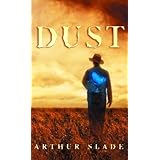
and then later I'll finish reading DUST by Arthur Slade 


This book is surprising and sneaky and evocative and totally amazing.


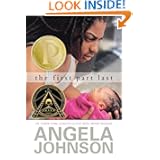
and then dip into THE FIRST PART LAST by Angela Johnson 


I'm looking forward to reading this VERY much. It's outside my normal reading pattern, which is a great thing.


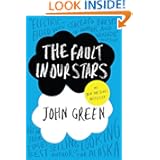
and if I still have time after that, I'll crack open THE FAULT IN OUR STARS by John Green.


WOO-HOO!


Phew!

What are you reading? And does your neighborhood identify their fire hydrants with signs showing pictures of fire hydrants, or am I alone in this?

Thursday, April 5, 2012

E is for Editor

When I was a kid, I thought an editor was someone who went through a manuscript and checked for misplaced semicolons and random typos. A lot of people still think that.

A lot of other people think an editor is a gatekeeper: someone with the power to make you an author, or not. Someone who decides.

A lot of people think an editor is a taste-maker.

A lot of people think an editor is extraneous - who needs to hire an editor or sign with a publisher in this age of spell-check and instant e-publishing?

But I would argue that editor is essential. Because an editor does more than find good manuscripts and correct typos. An editor is more than a gatekeeper, more than a taste-maker. An editor is more than any of your writing friends could ever be.

Because a good editor can read your manuscript, get to its heart, and ask you the questions that will force you to dig deeper into the soul of your manuscript and lay bare the essence of your story. Good editors can see the big picture and know what to say to make you see the places where the canvas is showing through because you didn't use enough paint.

Good editors are like gold.

What is your most memorable editorial experience?


And for more A-Z posts, go here.

Wednesday, April 4, 2012

D is for "Dear Editor"...

...which is something you should NEVER use to open a query.

Equally, you should never use "Dear Agent." These openings make the recipient of your query feel like they've been the recipient of a mass-email, and nobody likes that feeling. (I appreciate the irony of an editor telling us to query widely, and then saying that they don't want to feel like they're just one of a bunch of people receiving your query, but still. It's just not nice to be MADE to feel that way, even if it's a little bit true.)

You should also not open with anything like "Dear Agent Awesome," or "Dear One Who Holds My Dreams in Her Hands," or "O Worthy One," or anything like that. Some people think it makes you look witty, but it doesn't. It makes you look like a fruitcake, and we all know what happens to fruitcake: it ends up in sitting in a tupperware for 12 months until it finally sprouts a mould spore and you have an excuse to throw it in the trash. You don't want that to be your manuscript mouldering in some editor's trash.

Also, the fact is that most of the people who get your query are going to have to pass on it, for perfectly good reasons, which is fine - you only need one person to say "yes" - and saying "no" to someone is HARD. It sucks more than my mother's Dyson. Nobody likes turning people down. So don't make it harder for them by actually stating in your opening how high your hopes are that they will like your work.

Keep it professional. Use his or her last name. And that's it for queries for today!

For more #AtoZchallenge posts, check out the list here.